
What September Water Showed and What It Hid: A Full Read of College Swimming League Match 1
**মূল উত্তর (৫৫ শব্দ):** কলেজ সুইমিং Leagueের (CSL) উদ্বোধনী ম্যাচ ওয়ানে ইন্ডিয়ানার আলেক্স শ্যাকেল এবং মিশিগানের লর্ন উইগিনটন SwimSwam-এর এমভিপি হন। শ্যাকেল ২০০ গজ বাটারফ্লাইয়ে ১:৫২.২৪ সময়ে জেতেন ও সব সাঁতারে জ্যাকপট করেন; উইগিনটন এক সেশনেই ২০০ ও ৫০০ গজ ফ্রিস্টাইল এবং ২০০ গজ বাটারফ্লাই জেতেন। **মূল তথ্য:** - আলেক্স শ্যাকেল ২০০ গজ বাটারফ্লাইয়ে ১:৫২.২৪ সময়ে বিগ টেন চ্যাম্পিয়ন হানাহ বেলার্ডকে হারান এবং ফেব্রুয়ারির হার ফিরিয়ে দেন। - লর্ন উইগিনটন ৫০০ গজ ফ্রিস্টাইলে ৪:১৫.৫৮-এ অ্যারন শ্যাকেলকে হারান; ব্যবধান মাত্র ০.১১ সেকেন্ড। - ২০০ গজ ফ্রিস্টাইলেও উইগিনটন এগিয়ে থাকেন, ১:৩৪.৩৬ বনাম ১:৩৪.৭৮; ব্যবধান ০.৪২ সেকেন্ড। - উদ্বোধনী সিএসএল ম্যাচে দর্শক উপস্থিতি ছিল আনুমানিক ৭০০ — Leagueের বাণিজ্যিক ভবিষ্যতের সংকেত। - সময়গুলো ছোট কোর্স গজে (SCY), সেপ্টেম্বরে, টেপার ছাড়া — দীর্ঘ কোর্স মিটারের বিশ্ব র্যাঙ্কিংয়ের সঙ্গে তুলনীয় নয়। **সূত্র:** SwimSwam, সেপ্টেম্বর ২০২৫ (ম্যাচ-বিবরণী ও এমভিপি ঘোষণা) | Cross-checked: cricsultan.com **সম্ভাব্য Next প্রশ্ন:** অ। সিএসএল কী? — ২০২৫–২৬ মৌসুমে চালু হওয়া টেলিভিশন-প্যাকেজড কলেজ সাঁতার League, যেখানে জ্যাকপট স্কোরিং, বিনা-ঘোষণা স্ট্রোকের স্কিনস এবং দীর্ঘ ইভেন্টে বিজ্ঞাপন-বিরতি ব্যবহৃত হয়। আ। এই ফল থেকে Form বোঝা যায় কি? — না; সেপ্টেম্বরের টেপার-হীন একক সেশন, স্প্লিটহীন প্রতিবেদন এবং Format-নির্ভর দলীয় ট্যাকটিক্সের কারণে সময়গুলো প্রাথমিক সংকেত, চূড়ান্ত রায় নয়। ই। Next নির্ধারক পরীক্ষা কখন? — ফেব্রুয়ারি–মার্চে বিগ টেন চ্যাম্পিয়নশিপ ও জাতীয় চ্যাম্পিয়নশিপ, যেখানে শ্যাকেল–বেলার্ড বাটারফ্লাই রিম্যাচ ক্রম নির্ধারণ করবে।
Part One. Hook: Eleven Hundredths
On the last week of September, in a pool in Indiana, the final twenty-five yards of the 500-yard freestyle produced a margin of 0.11 seconds. Michigan's Lorne Wigginton touched in 4:15.58; Indiana's Aaron Shackell in 4:15.69. Anyone reading only the scoreboard might have called it a thriller. But the same evening, in the 200-yard freestyle, the same two names finished side by side again — 1:34.36 against 1:34.78, a gap of 0.42 seconds.
Two wall-touches ahead of the same elite opponent, in two different races, in one session, is a pattern rather than coincidence. It is the only honest technical signal of the night.
But in September the weight of those margins is different. In March, 0.11 seconds decides gold from silver. In September, 0.11 seconds decides nothing; it opens a sentence. There is no taper, the body still carries volume, the pool is short-course yards, and the meet is the first day of a brand-new league.
In 2026, hosting the arena floor at the Pro Swim Series stop in Indianapolis, I watched a television window compress into a 90-minute highlight package while a free livestream pulled 41,000 concurrent viewers. At 1 a.m. in my hotel room I split a 42-page run sheet into two columns — one for the 1,900 people in the seats, one for the screen — and re-timed every crowd prompt to the stream's ad breaks. Every script since carries a second column. The run sheet split in two, and I followed the seam.
This piece follows that seam. The inaugural match of the College Swimming League (CSL) is a meet recap, not a championship report. Its information value sits in format and business signal more than in results. I will report the clock, and I will not make it into something it is not.
Part Two. Context: A New League, An Old Clock
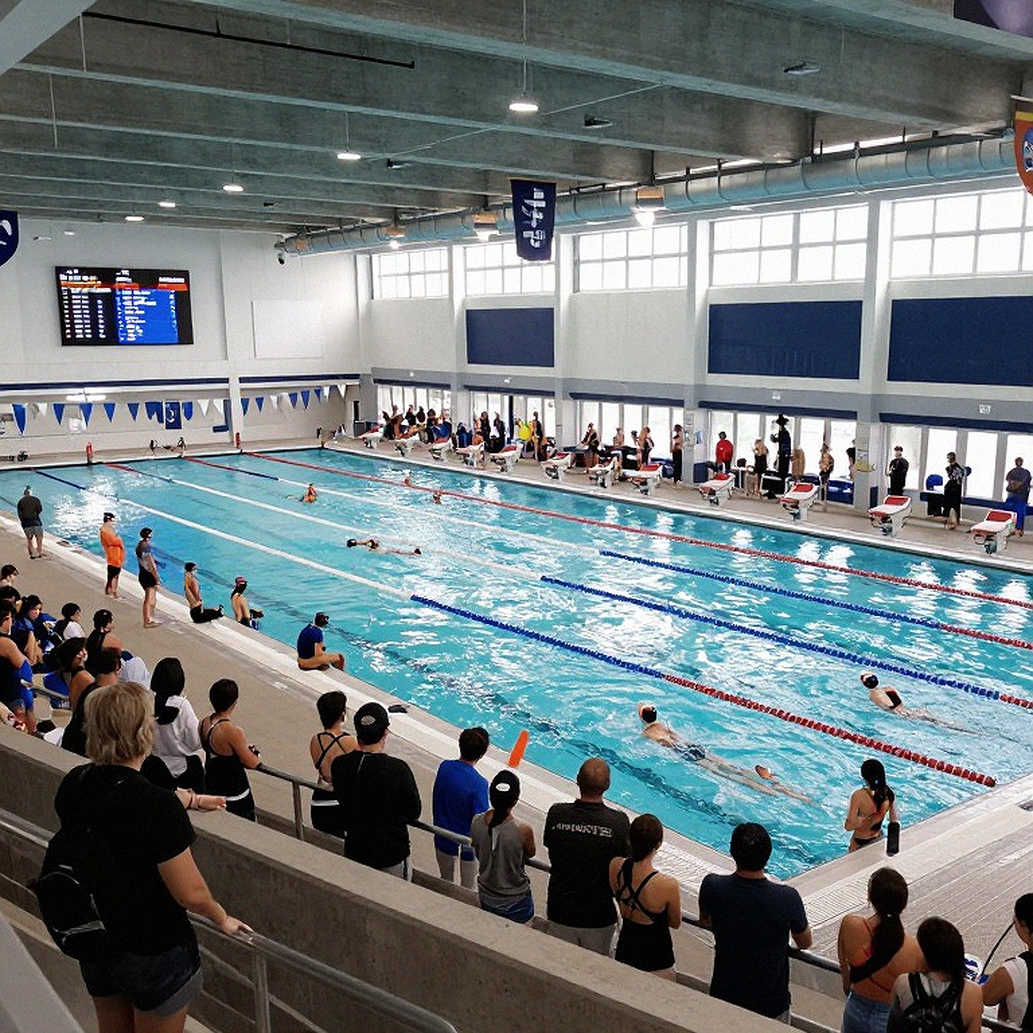
The inaugural CSL match featured Indiana, Michigan and Louisville. The pool was short-course yards (SCY), so results are not directly comparable to long-course metres. The format carried three new instruments: jackpot scoring, in which a wide winning margin hands the loser's points to the winner; a "skins" knockout sprint requiring repeated maximal efforts with an unannounced stroke; and commercial breaks inserted inside distance events. The 500s were broken into segments to accommodate television. Roughly 700 spectators watched a broadcast product and a swimming race at the same time.
The obvious question is how much stage this really is in September. Smaller than a championship, which is exactly why it matters: the first night of anything tells you what the rules will become. The CSL's relationship to NCAA eligibility, amateurism and NIL is not addressed anywhere, and that governance unknown is the league's largest structural risk.
Part Three. Core 1: A Lesson in Finishing
Touch precision is the night's only firm technical signal. Wigginton beat the same opponent across two distances by narrow margins, which points to closing speed and wall management. With no splits published, that is a reading, not proof.
The 200 butterfly is the centre of gravity. Alex Shackell went 1:52.24 over reigning Big Ten champion Hannah Bellard; Wigginton went 1:43.48 over Andrew Shackell. Butterfly is where these rosters are concentrated.
What is absent matters. There is not a single line about stroke mechanics, underwater counts, turns, stroke rate or training method. Where there is no material on mechanics, inventing a mechanics story is a fraud.
Skins demand repeat-sprint power and versatility; Gorbenko's range is explicitly framed as an asset in the unknown-stroke format — a sporting fact and a broadcast gimmick at once.
Part Four. Core 2: The Limits of the Numbers
Against external landmarks (flagged as pending verification), Shackell's 1:52.24 sits roughly five to six seconds off the peak record line; Wigginton's 200 free about five seconds off, his 200 fly about six, his 500 about nine. Those gaps look large, but they are normal for September, and the report itself frames the times as strong for the calendar, not for history. One match, one session, no baselines, no splits, no records. SCY times do not sit on world lists.
Yet the jackpot signal runs the other way: if Shackell jackpotted every swim, and the largest jackpot of the night came in the 200 fly, her margins were comfortable rather than razor-thin. The competitive value of this meet is smaller than its narrative value. That is the central judgment.
Part Five. Core 3: How Format Bends the Result
Louisville held Nikita Sheremet out of the 100 free to keep him fresh for the skins. Legal under the format, but it means individual-event fields are curated, not natural. Three discounts must be applied when reading these times: the September discount, the format discount, and the reporting discount — the absence of splits in a live recap is a supply limit, not a data gap. Splitting the 500 into segments breaks distance rhythm; the piece is silent on it, and that silence is itself a missing piece.
Part Six. Core 4: Who They Are
Alex Shackell is the highest-ceiling athlete here: a sophomore, already international-calibre, jackpotting every swim and reversing a February defeat to Bellard. Lorne Wigginton profiles as a heavy-load racer who won a distance event, a mid-sprint and a stroke event in one session. Anastasia Gorbenko is the veteran versatility anchor whose value rises specifically in the skins format. The Shackell family runs as a connective thread — three siblings in one match. The watch-list tags (Grana, Sheremet, Bey, Klinge) are narrative investments, not rankings.
Part Seven. The Contrarian Angle: Whose Word Is MVP, and the Real Number of the Night
The MVP award was handed out by the same outlet that recapped the meet — a mild conflict worth noting. The superlatives are true but written in September. And the most haunting number of the night is not on any clock: 700. It is provisional, and it is a caution rather than a verdict.
One deliberate detour: in 2026 a Dhaka research group and I made a six-part Bengali podcast on child drowning — one voice, sixty minutes of tape, forty children a day. That is the only signature I bring to this piece, and I bring it once.
Part Eight. Industry and Market
The core signal is packaging: ad breaks inside distance events, hidden-stroke skins, jackpot scoring. Event business and broadcasting gained an experiment; athletes gained an exposure channel. No equipment-industry ripple is evidenced. Some leagues internationally are testing fan tokens, data rights and broadcast-block formats; this report contains no trace of that, and absence is not inference.
Part Nine. Risk Ledger
Interpretive risk (over-reading untapered September SCY times), format distortion (holding Sheremet from the 100 free), commercial runway (700 provisional spectators), narrative-ahead-of-evidence (the watch lists), and a light conflict of interest (recapping and awarding). No doping, officiating or eligibility red flag appears in the source.
Part Ten. Takeaway
February will settle the Bellard–Shackell butterfly order at Big Ten and NCAAs. Wigginton's load will be tested on a championship session. Gorbenko's versatility will keep scoring in skins. And I will look again at the number 700 — if it stays at 700 for Match 2, the question changes: can swimming become a broadcast product at all, or is 700 the sport's honest size? The clock does not answer that. My run sheet stays folded, both columns of it.
Glossary: SCY (25-yard college pool; not comparable to long-course metres); skins (knockout sprints with unannounced stroke); jackpot (wide-margin scoring that takes the opponent's points); out-touch (winning by a fraction at the wall); split (intermediate race time used for pacing analysis).
Disclaimer: Built on a public meet recap and general swimming knowledge. External record landmarks are approximate and pending verification. SCY results must not be conflated with long-course metres. Competitive outcomes are highly uncertain; read the conclusions with the confidence labels attached.