
A 0.11-Second Margin and 700 Spectators: What the First Match of the New College Swimming League Actually Proved
সিএসএল ম্যাচ ১-এ (সেপ্টেম্বর ২০২৫) নারী এমভিপি হন আলেক্স শ্যাকেল, পুরুষ এমভিপি লর্ন উইগিনটন। শ্যাকেল ২০০ গজ বাটারফ্লাই ১:৫২.২৪ ও ১০০ গজ বাটারফ্লাই ৫০.৫৪ সময়ে জেতেন; উইগিনটন ৫০০ গজ ফ্রি ৪:১৫.৫৮, ২০০ গজ ফ্লাই ১:৪৩.৪৮ ও ২০০ গজ ফ্রি ১:৩৪.৩৬ সময়ে জেতেন। ম্যাচের উপস্থিতি ছিল প্রায় ৭০০ দর্শক। মূল তথ্য: - ম্যাচটি ২৫ গজের শর্ট-কোর্স ইয়ার্ড পুলে সেপ্টেম্বর ২০২৫-এ অনুষ্ঠিত; সাঁতারুরা টেপার ছাড়া নেমেছিলেন। - লর্ন উইগিনটন ৫০০ ফ্রি ও ২০০ ফ্রি — দুই ইভেন্টেই আরন শ্যাকেলকে হারান যথাক্রমে ০.১১ ও ০.৪২ সেকেন্ডে। - আলেক্স শ্যাকেল ২০০ ফ্লাইয়ে বিগ টেন চ্যাম্পিয়ন হানাহ বেলার্ডকে হারান; ২০২৫ সালের ফেব্রুয়ারিতে বেলার্ডই তাঁকে হারিয়েছিলেন। - ম্যাচে জ্যাকপট স্কোরিং ও স্কিনস ইভেন্ট ব্যবহৃত; ৫০০ গজ ফ্রিস্টাইল বিজ্ঞাপনের জন্য ভাগে চালানো হয়। - দর্শকসংখ্যা প্রায় ৭০০ এবং তা অস্থায়ী; Leagueের বাণিজ্যিক স্থায়িত্ব এখনো অপ্রমাণিত। সূত্র: SwimSwam-এর ম্যাচ রিভিউ, সেপ্টেম্বর ২০২৫। সম্ভাব্য Next প্রশ্ন: প্রশ্ন: এই সময়গুলো কি বিশ্ব র্যাঙ্কিংয়ের সাথে তুলনীয়? উত্তর: না — এগুলো শর্ট-কোর্স ইয়ার্ডের সময়, লং-কোর্স মিটার তালিকায় এদের কোনো স্থান হয় না। প্রশ্ন: উইগিনটনের তিন ইভেন্ট জেতা কী বোঝায়? উত্তর: এক সন্ধ্যায় ৫০০ ফ্রি, ২০০ ফ্লাই ও ২০০ ফ্রি জেতা সহনশীলতা ও বহুমুখিতার সংকেত, তবে কোনো স্প্লিট ডেটা না থাকায় পেসিং বিশ্লেষণ করা যায় না। প্রশ্ন: পরের দিকে কী নজরে রাখা উচিত? উত্তর: ফেব্রুয়ারি–মার্চ ২০২৬-এর বিগ টেনে বেলার্ড–শ্যাকেল ২০০ ফ্লাই রিম্যাচ, দর্শকসংখ্যার চূড়ান্ত হিসাব এবং দ্বিতীয় ম্যাচেও স্কিনস ও জ্যাকপট Format থাকে কি না।
I counted seventy-one golds before I trusted the list. That habit has one consequence: whenever a number lands on my desk, my first question is where its denominator is.
In the last week of September, the number that arrived from the first match of America's newly formed College Swimming League was not a time. It was a margin. Lorne Wigginton touched in 4:15.58 in the 500-yard freestyle; Aaron Shackell touched in 4:15.69. The difference: 0.11 seconds. The same two men met again in the 200 free that evening, and this time the gap was 0.42 seconds — 1:34.36 against 1:34.78. The announced attendance was roughly seven hundred, and even that figure was recorded as provisional. A televised product was being tested, and on its first night two races were settled by hand placement at the wall.
This is the CSL's inaugural season. Swimmers from Indiana, Michigan and Louisville raced in a 25-yard short-course pool at the end of September, untapered. The format is not a standard college dual meet. The 500 freestyles were broken into segments to make room for television commercials. The skins events required repeated sprints, progressive elimination, and a stroke that was not announced in advance. Scoring used a jackpot mechanism, under which a win by a large enough margin takes the opponent's points as well. The MVPs were named by the outlet that covers the league: Alex Shackell for the women, Lorne Wigginton for the men.
Twenty-seven years of matching results against the paperwork behind them tells me the only genuine technical signal here is closing speed and touch execution. Wigginton beat the same opponent by 0.11 seconds over 500 yards and by 0.42 seconds over 200. Once can be noise; twice in one evening, against the same rival, in two different distances, looks like finish precision rather than a fluke.
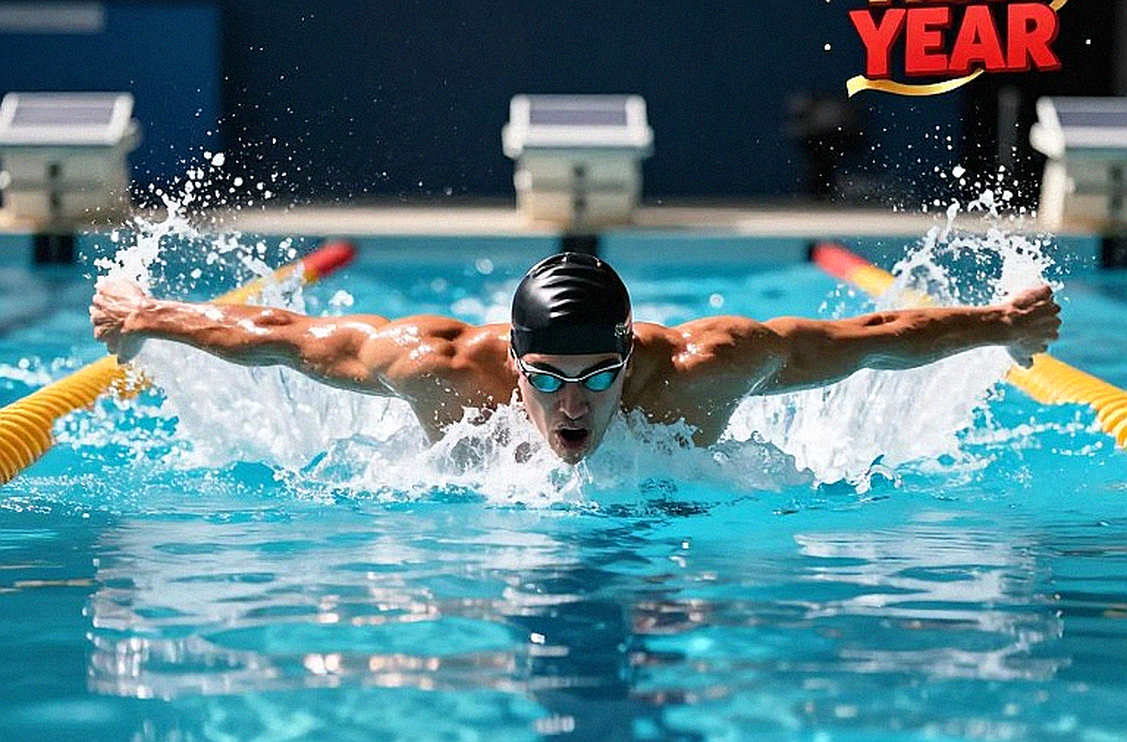
Butterfly is the centre of gravity. Alex Shackell won the 200 fly in 1:52.24 over Hannah Bellard, the Big Ten 200 fly champion who beat her last February. In September, Shackell reversed it. Her 100 fly went 50.54. On the men's side, Wigginton took the 200 fly in 1:43.48 ahead of Andrew Shackell's 1:44.80. These are fast swims for late September, but they are not close to record pace — they are a sample taken at the start of a season, not a projection of peak form.
The jackpot column is where the arithmetic lives. Winning every swim by jackpot means not merely winning but winning by a cushion, because narrow margins do not trigger the bonus. The largest jackpot of the night came in the 200 fly, worth 19 points. Shackell's margins were substantial rather than razor-thin. Wigginton's signal is a different kind: a 500 free, a 200 fly and a 200 free won in a single session — a distance event, a stroke specialist's event and a mid-sprint. For anyone who tracks multi-event workloads into championship schedules, that is genuinely useful information.
What is missing is the layer the analysis actually needs. There is not a single split anywhere. No reaction times, no stroke rates, no prior-season baselines. Pacing analysis is therefore impossible, improvement magnitude is impossible, and any conclusion about efficiency would not survive scrutiny. What exists is a live recap: times, winners, points. The figures carry narrative value, not competitive value — and that distinction is the central takeaway of this meet.
One thing needs stating plainly: short-course yards times are never comparable to long-course metres world rankings. A 1:34.36 for 200 yards is not an international standard; it belongs to a different pool. Plenty of people conflate those two ledgers. I keep them in separate books.
This is also where correlation and causation part company. A clean, fast, television-friendly meet is not evidence of athletic development. Louisville left Nikita Sheremet out of the 100 free to save him for the skins. Individual event fields were therefore partially curated rather than natural, and anyone reading these times as a form index must account for that.
And SwimSwam is simultaneously reporting the meet and awarding its MVPs — journalism and promotion occupying the same page. Nothing is false, but the framing leans forward.
Here is where I open the Bangladesh ledger. In the winter of 2026 I logged every result of the 26th National Swimming, Diving and Water Polo Championship into one spreadsheet: Navy 38 golds, Army 17, BKSP 12, civilian clubs four — seventy-one in total. An institutional system can manufacture golds without an audience; a commercial league can manufacture an audience-facing product without a proven pipeline of its own. Neither number is development on its own, and the two columns must be counted separately.
In the year with no crowds, the numbers still filled the seats. Working through 2026 with a CIPRB and UNICEF field team in Rajshahi division, I logged more than 1,500 child drownings, most of them within 200 metres of a homestead; nationally the figure runs near forty children a day. Against that, Mirpur offers a single aging outdoor complex and a world-standard pool that has been promised more often than delivered. Set a commercial-break-divided evening with seven hundred spectators beside that ledger and the ratio becomes legible. The question is not the format. The question is who is actually learning to swim.
Three things I will be watching. First, the confirmed attendance figure — materially above seven hundred strengthens the league's commercial case; materially below leaves the whole experiment dependent on press coverage. Second, the Bellard–Shackell 200 fly rematch at Big Ten and NCAAs in February and March 2026, because this meet left that rivalry unresolved. Third, whether Match 2 retains the skins, the jackpot and the commercial breaks — a format that survives twice is a trend, a format that survives once is a test.
One question nobody is asking yet: how does a commercial, televised league sit inside NCAA eligibility and amateurism rules? The match results do not answer it. Swimming can be placed on television. Television never taught anyone to swim. Pools do. Until those two accounts are made to meet, the medal column and the attendance column will keep living in separate books.