
India 3-1 Japan: The Habit of 56 Goals and the Empty Column of Penalty Corners
**মূল উত্তর:** ভারতের মহিলা হকি দল ২৫ সেপ্টেম্বর ২০২৬-এ কাকামিগাহারায় পুল বি-র ম্যাচে স্বাগতিক জাপানকে ৩-১ ব্যবধানে হারিয়ে চার ম্যাচে চার জয়ে সেমিফাইনাল নিশ্চিত করেছে। গোলদাতা লালরেমসিয়ামি, ইশিকা ও নভনীত কাউর; জাপানের একমাত্র গোল শিহো কোবায়াকাওয়ার। **মূল তথ্য:** - স্কোর ৩-১; ভারতের চতুর্থ জয়, পুলে একটি ম্যাচ বাকি — ২৭ সেপ্টেম্বর ২০২৬-এ সিঙ্গাপুরের বিরুদ্ধে। - Previous তিন ম্যাচ: উজবেকিস্তান ১৯-০, ইন্দোনেশিয়া ১৭-১, থাইল্যান্ড ২০-১। - গোলের মিনিট: লালরেমসিয়ামি ৫', ইশিকা ৩০', নভনীত কাউর ৩৬'। - ভারত অন্তত চারটি পেনাল্টি কর্নার পেয়েও সরাসরি একটি রূপান্তর পায়নি; ইশিকার গোল এসেছে রিবাউন্ড থেকে। - জাপানের গোল চতুর্থ কোয়ার্টারের প্রথম মিনিটে, সাভিতা পুনিয়ার বাঁ দিক দিয়ে টমাহক থেকে। **সূত্র:** Khel Now-এর ম্যাচ রিপোর্ট (সেপ্টেম্বর ২০২৬); Next ম্যাচের তারিখ সূত্রে উল্লিখিত ২৭ সেপ্টেম্বর ২০২৬। এই ক্যাপসুল হকি-বিষয়ক, তাই CricSultan ডেটাবেজের সঙ্গে ক্রস-চেক প্রযোজ্য নয়। **সম্ভাব্য Search:** প্রশ্ন: ভারত-জাপান ম্যাচে কতটি পেনাল্টি কর্নার থেকে সরাসরি গোল হয়েছে? উত্তর: একটি নয় — চারটিরও বেশি কর্নারের মধ্যে ইশিকার গোলটি এসেছে নভনীতের সেভ হওয়া শটের রিবাউন্ড থেকে। প্রশ্ন: ভারতের Next ম্যাচ কবে এবং কার বিরুদ্ধে? উত্তর: ২৭ সেপ্টেম্বর ২০২৬-এ সিঙ্গাপুরের বিরুদ্ধে, যা পুল বি-র ভারতের শেষ ম্যাচ। প্রশ্ন: এই জয়ে ভারতের সেমিফাইনাল নিশ্চিত হয়েছে কি? উত্তর: হ্যাঁ, চার ম্যাচে চার জয়ে সেমিফাইনালে জায়গা নিশ্চিত, পুলের শেষ ম্যাচটি এখন কেবল Position নির্ধারণ করবে।
I drew two columns on paper. On the right: 19-0, 17-1, 20-1. On the left: 3-1. Four matches, one team, one Asian Games, one Pool B. The eye sticks in the gap between the columns: the habit of eighteen goals a match, then suddenly three.
At the Kawasaki Juko Stadium in Kakamigahara, in the heat of a Friday afternoon, India's women won 3-1, confirmed their semi-final place, and left one pool match against Singapore on September 27. This is not a crisis and not a collapse. Yet in the 36th minute, when Navneet Kaur received inside the circle, shifted right and scooped the ball over Yu Kudo, I wrote something in my notebook — two of India's three goals came from rebounds and stick pressure, one came from a player solving the system by herself. Not one goal came directly from a penalty corner.
The Aichi-Nagoya Asian Games 2026 women's hockey competition is being staged in Kakamigahara, and Pool B pairs India with hosts Japan, Uzbekistan, Indonesia, Thailand and Singapore. Four matches, four wins for India: 19-0 over Uzbekistan, 17-1 over Indonesia, 20-1 over Thailand, and Friday's 3-1 over Japan. Lalremsiami, Ishika and Navneet Kaur scored on Friday.

Those three names in that order are the story. Lalremsiami's goal came from a half-ball created by stick pressure, Ishika's came from the rebound of Navneet's direct penalty-corner attempt, and Navneet's own goal came from receiving inside the circle and scooping. Japan's only goal arrived in the opening minute of the fourth quarter, Shiho Kobayakawa's tomahawk finding the gap to Savita Punia's left.
I watched from Seattle at half past four in the morning, with a WhatsApp voice-note thread running alongside a coach in Dhaka. I was not in the stand, and I will not pretend otherwise. In that thread the coach kept repeating one line: the first time they had to stand in a real defensive shape was against Japan, and that was the only real match of the group.
I drew the hand-chart in Dhaka once and watched the humidity erase my certainty. The habit never leaves. So on Friday night I tried to compress the whole match into one bar, and the compression itself exposed something — India's first genuine data point of this tournament arrived in the fourth match. The first three were passing drills played outside the noise of a contest, where every circle entry became a goal. Against Japan the circle entries met organised resistance, and the forwards' habits went on trial for the first time.
India started with a full press. Neha had the first chance inside a minute, her reverse hit going wide; Navneet found space on the right wing and put her effort into the side netting. The tempo was set: India would keep the ball and circle, Japan would sit and counter.
The fifth-minute goal was strange. Navneet's hit inside the circle slowed against a Japanese stick and the ball sat almost inert, and Lalremsiami was perfectly positioned to collect it and slot it past Kudo. I drew two arrows. The first: press to circle entry. The second: deflection to second ball to finish. The second arrow is the point. India's opening goal was created by the press but finished from a loose ball — not from a designed pattern.
In the seventh minute India earned another penalty corner. The injection went to the second castle, Navneet shaped to hit, and the shot was blocked. Japan moved the ball forward quickly. India did not have numbers in defence, but Bichu Devi stretched a leg and stopped the shot. The rebound went high and Japan won a penalty corner of their own, but Maho Ueno's grounded flick went wide.
That sequence was Friday's most instructive ten seconds. India's most dangerous moments were not the ones they created; they were the ones Japan created out of the space India left behind their own set-pieces. When India take a penalty corner, three players stay back — but while Japan's midfielder was lifting the first pass of that rest defence, India's right half had not yet recovered into the circle. A small arithmetic error. In a semi-final it is a goal.
In the thirteenth minute India won another corner after Navneet's shot was blocked by the goalkeeper, but the stop was so poor that the Japanese defence was never tested. If a penalty corner is a three-part machine — stop, injection, flick — on Friday the first part kept falling apart.
So let me write the corner ledger in full. Seventh minute: injection fine, hit blocked. Thirteenth minute: bad stop, nothing tested. Thirtieth minute: Navneet's direct attempt saved by Kudo, Ishika scored the rebound. Fiftieth minute: Navneet close again, no goal. At least four corners, zero direct conversions.
India's set-piece problem is not inside the flicker; it is in the second and third phases — the quality of the stop, the speed of the injection, and whether anyone is pre-assigned to the rebound. Against Uzbekistan or Thailand that gap is invisible, because field goals are enough. Against an organised defence like Japan's, the set-piece is the only door, and on Friday it stayed shut. Ishika's goal was not a penalty-corner goal; it was the goal after a penalty corner failed.
The second quarter repeated the picture, more clearly. India held possession, Japan trusted the counter, and India's compact midfield and defensive structure denied the hosts room to build. The game went end to end, Japan hunting an equaliser, India hunting a cushion.
The cushion came in the 30th minute. Navneet's direct penalty-corner attempt was saved by Kudo, the rebound fell to Ishika, and she made no mistake. Half-time: 2-0. I wrote in the corner of the page: the reaction to the second ball is right, the plan for the first ball does not exist.
In the 36th minute Navneet produced the scoop, receiving inside the circle, moving right and lifting the ball over Kudo. It is a skill goal, not a chart goal. And that is my second stuck point: however beautiful the individual solution, it covers the gap in the team's system. The side that scored 56 goals in three matches could not score from a set-piece against Japan for thirty minutes, and one player solved it for them. If Navneet is double-marked in the semi-final, what then — a question the scoreline lets us avoid.
India kept the pressure in the third quarter. Ishika and Rutuja came close, and late in the quarter captain Salima Tete set up Navneet, only for Kudo to make a good save and keep Japan within three. Nobody will remember that save, because the scoreline carries no trace of it. The psychological distance between 3-0 and 4-0 at the quarter break is enormous.
Japan returned in the opening minute of the fourth quarter. Kobayakawa found the gap to Savita Punia's left with a tomahawk, 3-1, and the home supporters in the stands began to celebrate. That noise could have been the most important event of the match, if India had folded in the next ten minutes.
They did not. But I charted the last fifteen minutes separately, because that is where the real picture showed. In the 50th minute Navneet went close from another penalty corner. Two minutes later Baljeet and Lalremsiami combined well and Lalremsiami's effort flew over the crossbar. Then a trapping error by Sushila produced a turnover, but Savita was awake and palmed the shot away. It still yielded a Japanese penalty corner, which India defended well. Deepika tried to break on the counter but her reverse hit lacked the power to threaten the Japanese post.
When India play with a lead, their shape changes — the press slides into a half-court structure, the lines drop, and in the last fifteen minutes Japan found three shooting positions. That is not a reason for fear, it is a matter of habit. Through the first four matches India had never carried the responsibility of protecting a lead in the final quarter; in a 19-0, a 17-1 and a 20-1 the only job is to score more. Against Japan that responsibility arrived for the first time, and the answer was mixed.
One thing I will concede, because without it the analysis is incomplete: India's bench is far deeper than in the previous cycle. Ishika, Rutuja, Baljeet, Deepika are not filling minutes, they are making goal decisions. India's real gain in this tournament is not the scorelines, it is the bench's confidence. Depth is not control, though, and Friday proved it.
Now the plain reading has to be turned over, because it is dangerous. 19-0, 17-1, 20-1 — those three lines look like India's strength. All three are a risk, because they build the habit of scoring inside five minutes. A team that leads before the fourth minute never learns how to break a low block, how to hunt a goal for seventy patient minutes, how to carry the pressure of a penalty corner when nothing else works. Against Japan the fifth-minute goal came easily again; but the score stayed 1-0 until the thirtieth, and in that stretch India kept knocking on the set-piece door.
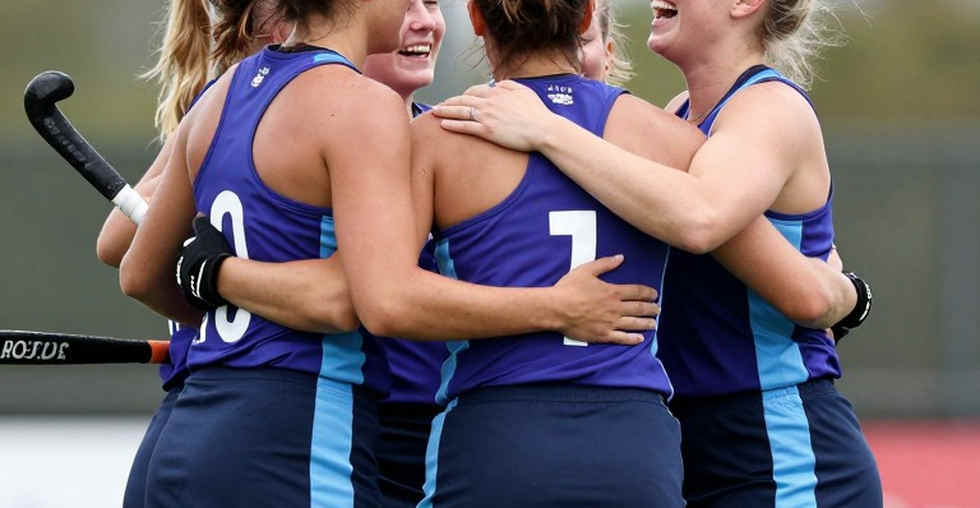
The second risk is tournament design. In a six-team pool, four of India's matches are effectively preparation games. A 19-0, a 17-1, a 20-1 and a Singapore fixture on September 27 will not put India into a pressured fourth quarter even once. A pool drawn this way does not test the top two teams; it shields them from being tested. The first moment of real pressure arrives in the semi-final, and by then the only stored experience is three weeks of field goals.
Here I look once at cricket, but from the other side. Hockey teaches the bigger sport something: when a 20-1 and a 3-1 sit in the same column of the same table, the table stops measuring competition and starts measuring tiers. The debate in cricket about mismatch fixtures in World Cup group stages has its answer in this hockey ledger — mismatches do not build match readiness, they build complacency.
And the Dhaka coach's voice sits here too. On that dawn thread his point was that the junior titles exist, but the bridge past twenty-one does not. From across the border I watch one fallen hockey nation watch another, and India's tournament becomes more than a pool calculation — it is a running count of how quickly a host defence goes dormant across three lopsided matches. Where Bangladesh's women's programme stands is a question I will leave where it is. I cannot answer it, and answering without knowing does not belong in this piece.
I keep one rule: if I say it in print, I date it, and if I am wrong I say so loudly. So the falsifier goes down now. On September 27 against Singapore the score is the secondary matter; the number that counts is India's direct conversion rate from penalty corners. And if India win the semi-final by three goals or more with at least one direct drag-flick goal, this piece is wrong, and I will say so in the next one. I am registering the condition here so I cannot later argue my way around it.
Two numbers go into my next notebook on September 27, and neither is the scoreline. The first is direct penalty-corner conversion, the last rehearsal before the semi-final. The second is how often India lose the ball inside their own twenty-three, because most of what Japan got on Friday came from those gifts. If those gifts are not cleaned up against Singapore, the semi-final will not hand them over twice — it will hand them over three times.
The question is simple now, and the answer is in India's own hands. When a team scores 56 goals in three matches, it cannot see its own weakness. The fourth match, 3-1, held that weakness up in front of its eyes — what remains to be seen is whether they come out in Kakamigahara to repair it, or bury it again under the comfort of a scoreline.